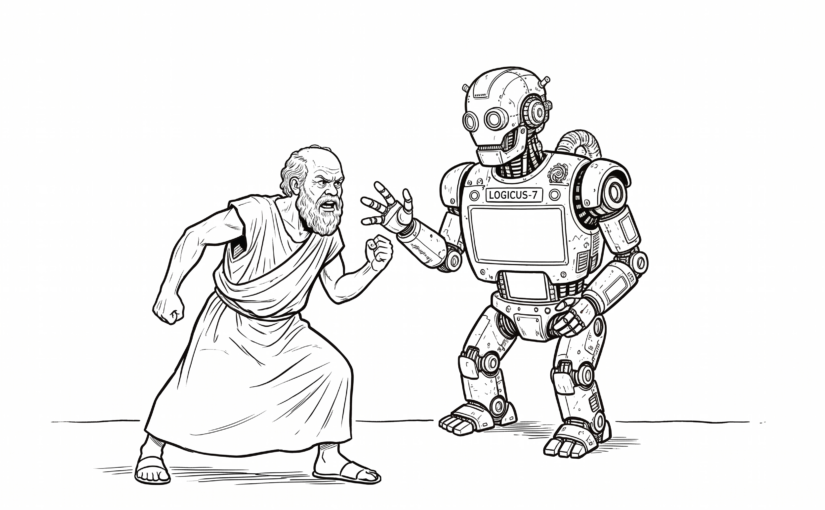
Socrates was famously critical of writing. Something we know about because someone wrote it down! There’s a parallel here with AI, though I can’t work out where it’s pointing. But it could lead to some optimism.
The parallel is the fear that the new technology will lead to bad things, mostly ignorance. For Socrates, it was that writing would lead to the “illusion of wisdom” and that they would “cease to exercise memory.” These days the fear is that AI use may lead to the “illusion of knowledge” and that people will “cease to exercise reasoning.”
And going back to the original writing, it’s interesting that one of Socrates’ objections was something that AI now provides: that you can ask them things and challenge what they tell you.
You know, Phaedrus, that is the strange thing about writing, which makes it truly correspond to painting. The painter’s products stand before us as though they were alive. But if you question them, they maintain a most majestic silence. It is the same with written words. They seem to talk to you as though they were intelligent, but if you ask them anything about what they say from a desire to be instructed they go on telling just the same thing forever.
Although we are certainly biased, given that you are reading this, I think we can agree that society has done quite well with this “writing” thing. Certainly writing has given people an illusion of wisdom and we certainly don’t memorize things as well as the ancients, but we get by.
So if the analogy holds, what does the AI-embracing society look like? Will they be as weak in reasoning as we are in memorization, by comparison, to the ancients? Will they have AIs that are as influential as much some written texts to our society? What would it mean for an AI to play a role as the Bible, the Vedas, or the works of Confucius or Aristotle?